
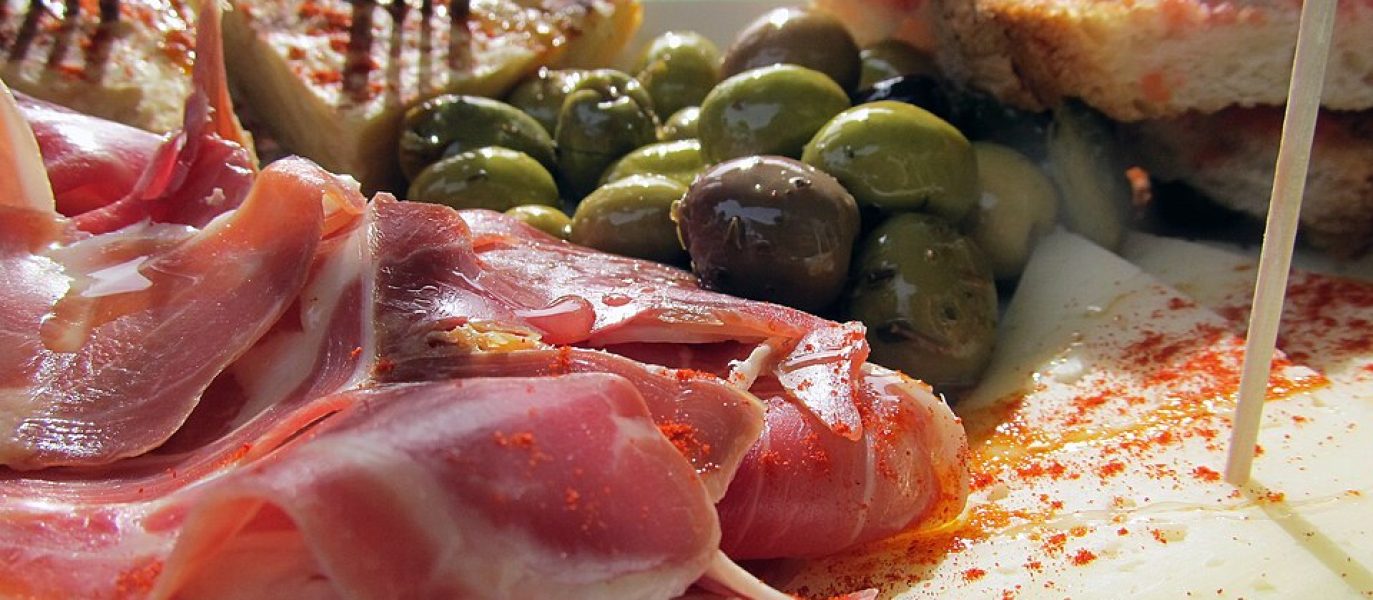
“Tapas (2)” by Nostrix, Wikimedia, Creative Commons Attribution-Share Alike 3.0
What are “tapas”?
A tapa is a small portion of food served in bars to accompany a drink. Its name comes from the Spanish verb tapar (“to cover”) and from the legend that, many years ago, people used to place a slice of bread, cheese, or ham over the top of a glass of wine to “cover” it and prevent flies or dust from getting inside. Over time, this simple “cover” evolved into the more elaborate dishes we know today.
Spain is famous around the world for its gastronomy, and tapas hold a very special place within it. Going out for tapas is not just about eating small portions of food; it is also about spending time with friends, discovering new flavours, and enjoying the lively atmosphere of streets and bars. Among the most popular places to experience this tradition are two cities with very different personalities: Madrid and Málaga. But where can you enjoy the best tapas?
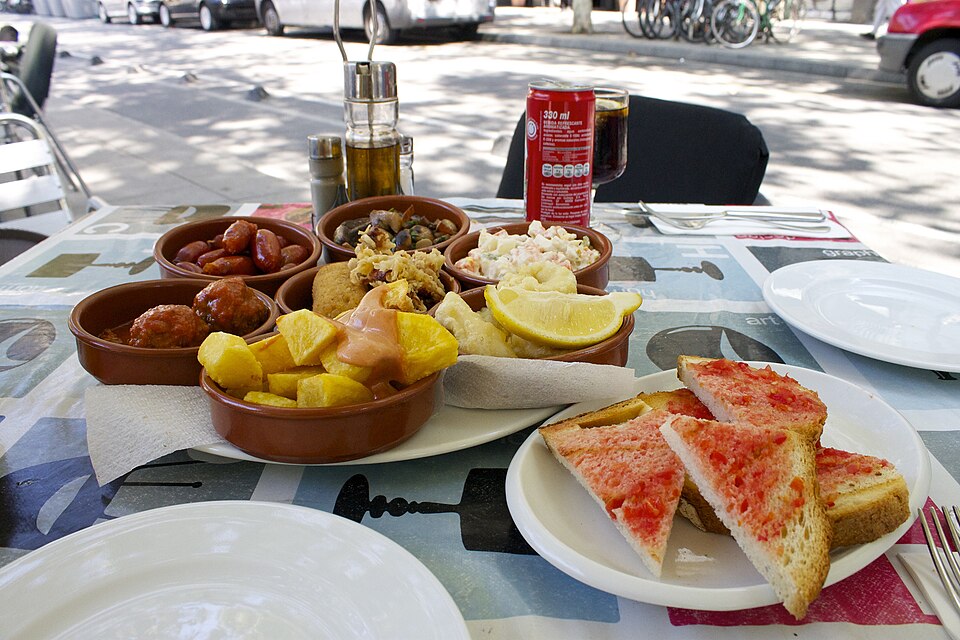
“Tapas en El Raval” by Katherine Price, Wikimedia, Creative Commons Attribution 2.0
La Latina: Madrid’s most traditional neighbourhood
Talking about tapas in Madrid means talking about La Latina. Its narrow streets, lively squares, and traditional taverns make it one of the city’s most popular neighbourhoods for enjoying tapas, especially at weekends. It is common to visit several bars, ordering a drink at each one along with a tapa or a larger dish to share.
Among the best-known specialities are patatas bravas, Spanish omelette, croquettes, fried calamari, Madrid-style tripe, and Iberian ham. Besides the food, La Latina is famous for its vibrant atmosphere, where locals and visitors spend hours chatting on terraces well into the evening.
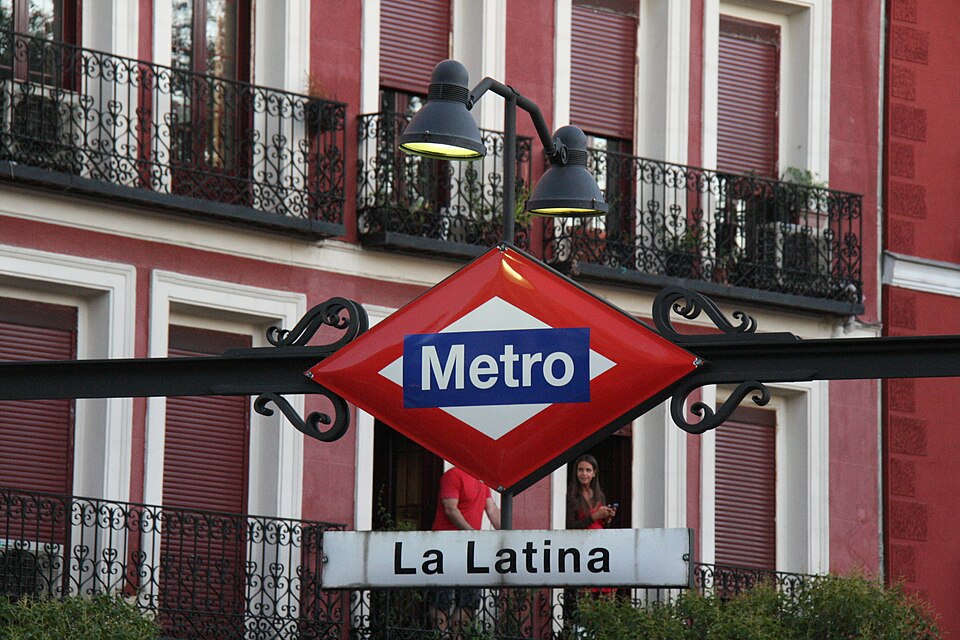
“La Latina – Metro” by Tamorlan, Wikimedia, Creative Commons Attribution-Share Alike 3.0
Málaga’s historic centre: Mediterranean flavours
If Madrid represents the traditions of inland Spain, Málaga perfectly reflects the essence of the Mediterranean. Its historic centre is full of bars, taverns, and small wine cellars where visitors can enjoy fresh local produce and traditional Andalusian recipes. Walking through its charming streets while stopping for tapas is one of the favourite activities of both tourists and locals.
Some of the most typical tapas include fried fish (pescaíto frito), marinated anchovies (boquerones), Russian salad, fried aubergines with cane honey, and prawns cooked in garlic and chilli (gambas al pil-pil). In addition, the city’s pleasant climate means that many terraces can be enjoyed almost all year round, making the experience even more enjoyable.
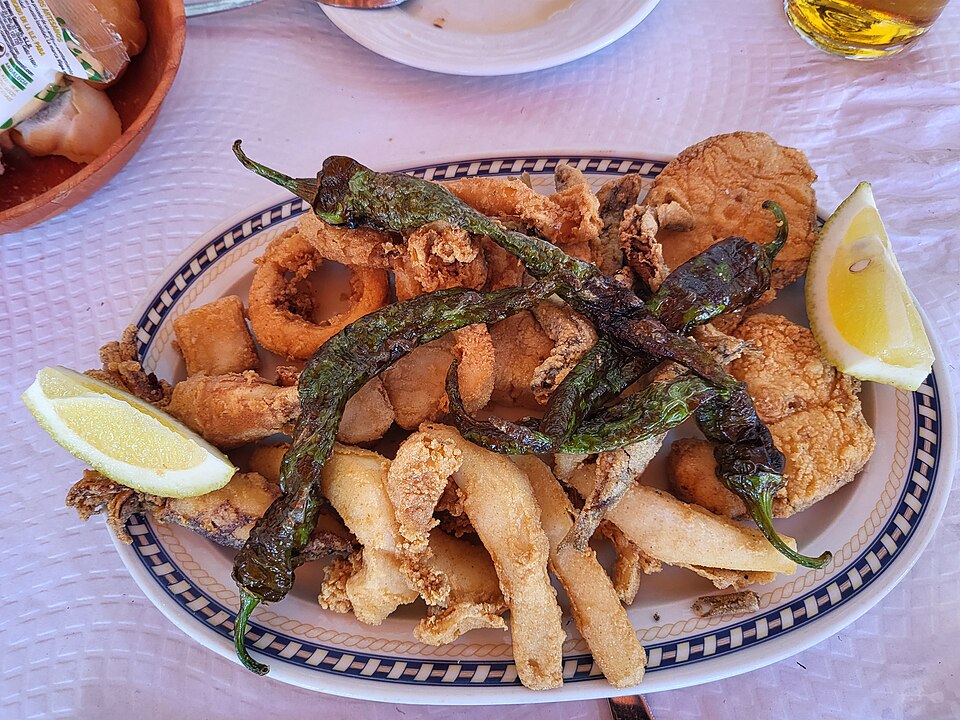
“Pescaíto frito. chiclana” by Xemenendura, Wikimedia, Creative Commons Attribution-Share Alike 4.0
Which is the better choice?
Choosing between La Latina and Málaga’s historic centre is not easy, as each offers a very different experience. Madrid stands out for its wide variety of traditional bars, the history behind its taverns, and the lively atmosphere of a major capital city. Málaga, on the other hand, wins visitors over with its fresh seafood, warm climate, nearby beaches, and more relaxed lifestyle.
In reality, there is no single right answer. Those who prefer traditional recipes and a classic Spanish atmosphere will probably enjoy La Latina more. Meanwhile, anyone looking for Mediterranean flavours, fresh seafood, and sunny terraces will find Málaga the perfect place to go out for tapas.
A tradition that brings Spain together
Despite the differences between these two cities, tapas are an essential part of Spanish culture. They are a way of bringing people together, sharing conversations, and discovering local cuisine in a simple and enjoyable way. Whether you are wandering through the streets of La Latina or the historic centre of Málaga, every tapa tells a story and offers a taste of the traditions of each region.
For this reason, the best tapas route ultimately depends on personal taste. What truly matters is not choosing one destination over the other, but enjoying one of Spain’s most famous and beloved culinary traditions.