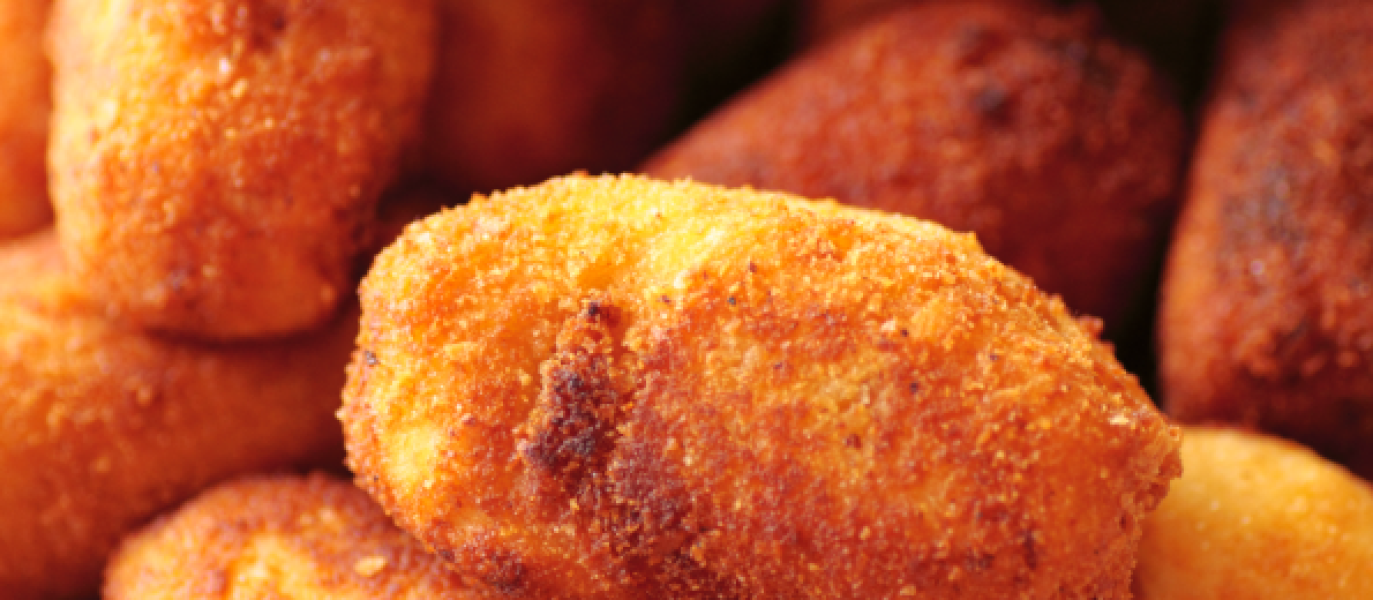
There are dishes that need no introduction. In Spain, the croquette is one of them. Small in size but enormous in meaning, it has become a true icon of Spanish gastronomy. In this MaestroMío article, we explore why the croquette is much more than a recipe: it is memory, tradition, and a symbol of identity that brings generations together.
Humble origins that won over palates
Although today we feel it is deeply ours, the croquette has distant origins. Its name comes from the French croquer, meaning “to crunch,” and the recipe arrived in Spain in the 19th century. However, it was here that it found its true identity. In a country shaped by a culture of making the most of what you have, the croquette became the queen of leftovers: chicken from the cocido, yesterday’s ham, or fish that remained in the kitchen.
With simple ingredients and a great deal of creativity, Spanish families turned necessity into virtue. In this way, the croquette evolved from a practical dish into a symbol of culinary ingenuity and home-made affection.
Homemade croquettes: memory and emotion
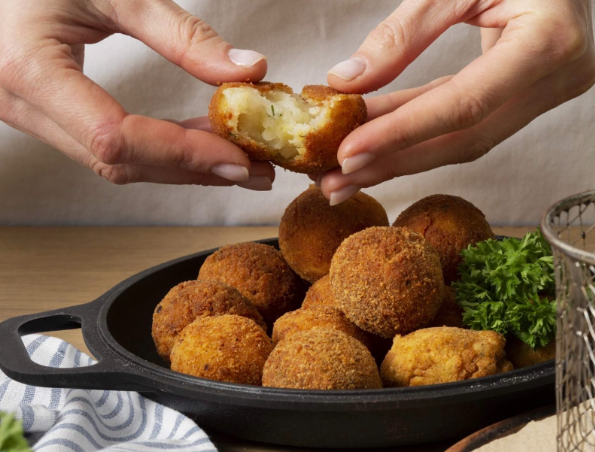
For many Spaniards, the best croquette is not eaten in a Michelin-starred restaurant, but at a grandmother’s or mother’s home. Every family has its own version: creamier or thicker, made with milk or broth, with nutmeg or without it. And each one is proudly defended.
Making croquettes is almost a ritual. It requires time, patience, and experience. Stirring the béchamel nonstop, letting it rest, shaping them one by one, carefully coating them… This is not fast food; it is cooking done with dedication. That’s why every homemade croquette carries more than just ingredients: it carries memories, tradition, and affection.
From the neighborhood bar to haute cuisine
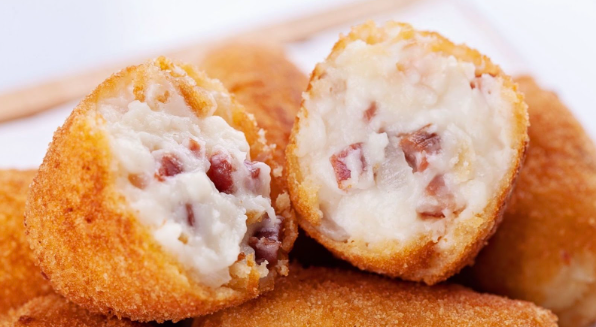
The croquette is also an undisputed star of the Spanish bar. There is no proper bar counter without a plate of croquettes, served as a tapa, a starter, or the perfect excuse to extend the conversation. Ham, chicken, cod, cheese, mushrooms… the varieties seem endless.
In recent years, haute cuisine has reclaimed this popular dish. Great chefs have taken the croquette to another level, playing with textures, unexpected fillings, and sophisticated presentations. Yet even in its most modern version, the croquette keeps its essence: crispy on the outside, creamy on the inside, and deeply comforting.
An almost philosophical question: what is the perfect croquette like?
In Spain, talking about croquettes means entering a serious debate. Should it be almost liquid inside or just creamy? Fine or coarse breadcrumbs? Intense flavor or perfect balance? These discussions, far from dividing us, bring us together. Because the croquette is not just food: it is conversation, shared identity, and collective pleasure.
Few recipes generate such emotional unanimity. Loved by children and adults, experts and beginners, locals and visitors alike. It is democratic, approachable, and always welcome.
Much more than a bite
The croquette represents deeply Spanish values: resourcefulness, hospitality, the joy of sharing, and a love for doing simple things well. It is the perfect example of how a humble dish can become a national symbol without losing its authenticity.
In short, the croquette is not just a recipe. It is a way of understanding cooking—and life: with patience, care, and the certainty that simple things, when done well, can be extraordinary. Because in Spain, few truths are as universal as this one: if there are croquettes, everything feels a little better.