


Holy Week in Spain
Holy Week in Spain is one of the country’s most important religious and cultural traditions. Every year, during the week leading up to Easter, the streets of many cities and towns are filled with solemn processions, religious music, incense, and moments of silence. In this context, a very typical word appears, especially in Andalusia: capillita. But what does it really mean to be a capillita?
What is a capillita?
The word capillita comes from capilla (chapel) and is mainly used in Andalusia, especially in cities like Seville. In everyday language, a capillita is someone who experiences Holy Week with great passion and is closely linked to a religious brotherhood (hermandad or cofradía).
Being a capillita does not simply mean watching processions. It involves following the life of the brotherhood throughout the year, taking part in religious services and preparations, knowing the history of the religious images, and feeling deeply moved by every detail: the carrying of a paso, a processional march, or the silence of a crowded street.
Sometimes the term is used affectionately or with a touch of irony, but it generally describes someone for whom Holy Week is an essential part of life.
Holy Week: tradition and culture
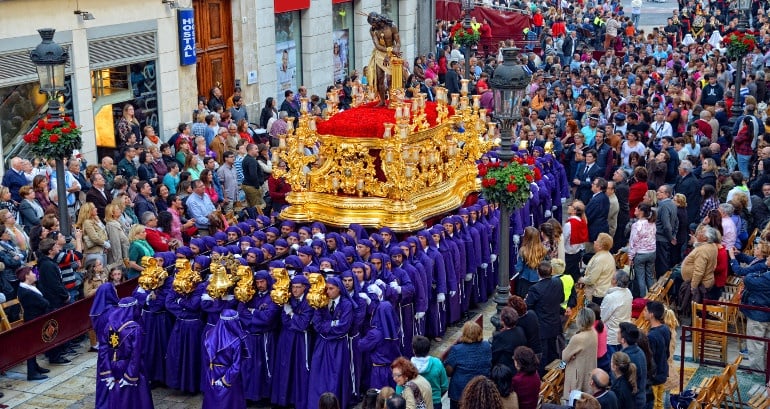
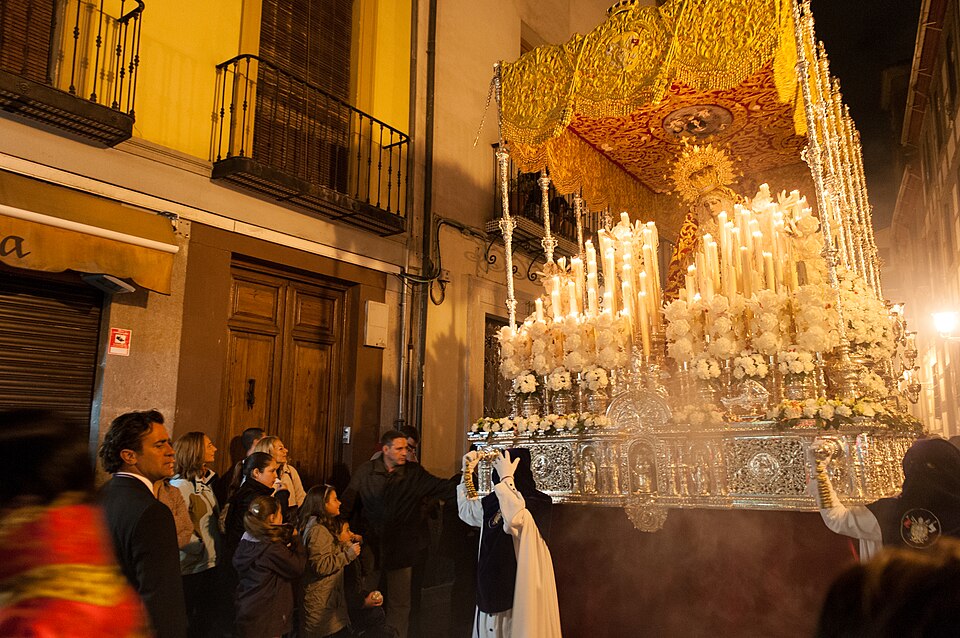
Holy Week commemorates the passion, death, and resurrection of Jesus Christ. During these days, the brotherhoods bring their religious images, known as pasos, into the streets. These are carried by the costaleros, while the nazarenos, dressed in tunics and pointed hoods, accompany the procession.
Beyond its religious aspect, Holy Week is also a cultural event. It combines art, music, history, and social life. Many people, even non-believers, go out into the streets to experience the unique atmosphere and beauty of the processions.
The capillita’s devotion
Capillitas know the processions in detail: schedules, routes, images, and music. For them, each Holy Week is special, lived with emotion and intensity. Being a capillita means feeling proud of a tradition passed down through generations and wanting to preserve it for the future.
How to recognize a capillita during Holy Week and throughout the year
Identifying a capillita goes beyond seeing them at processions. Typical signs include:
- During Holy Week: frequent attendance at processions, deep knowledge of the pasos, music, and routes, and active participation in a brotherhood.
- Throughout the year: involvement in brotherhood activities, attendance at religious services and meetings, interest in the history of the images, and a passion for keeping traditions alive.
- Attitude: respect for the ceremony, emotional reactions to details, and pride in what Holy Week represents.
In short, a capillita is not just a spectator; it is someone who lives and breathes Holy Week culture all year round, sharing enthusiasm and knowledge with others.
A cultural experience for visitors and students
For Spanish learners or foreign visitors, understanding what it means to be a capillita helps them better understand Spanish culture. Holy Week is not just a tourist event: it is a collective experience full of meaning, emotion, and tradition.